The civil sphere Theory
Working group
News
News
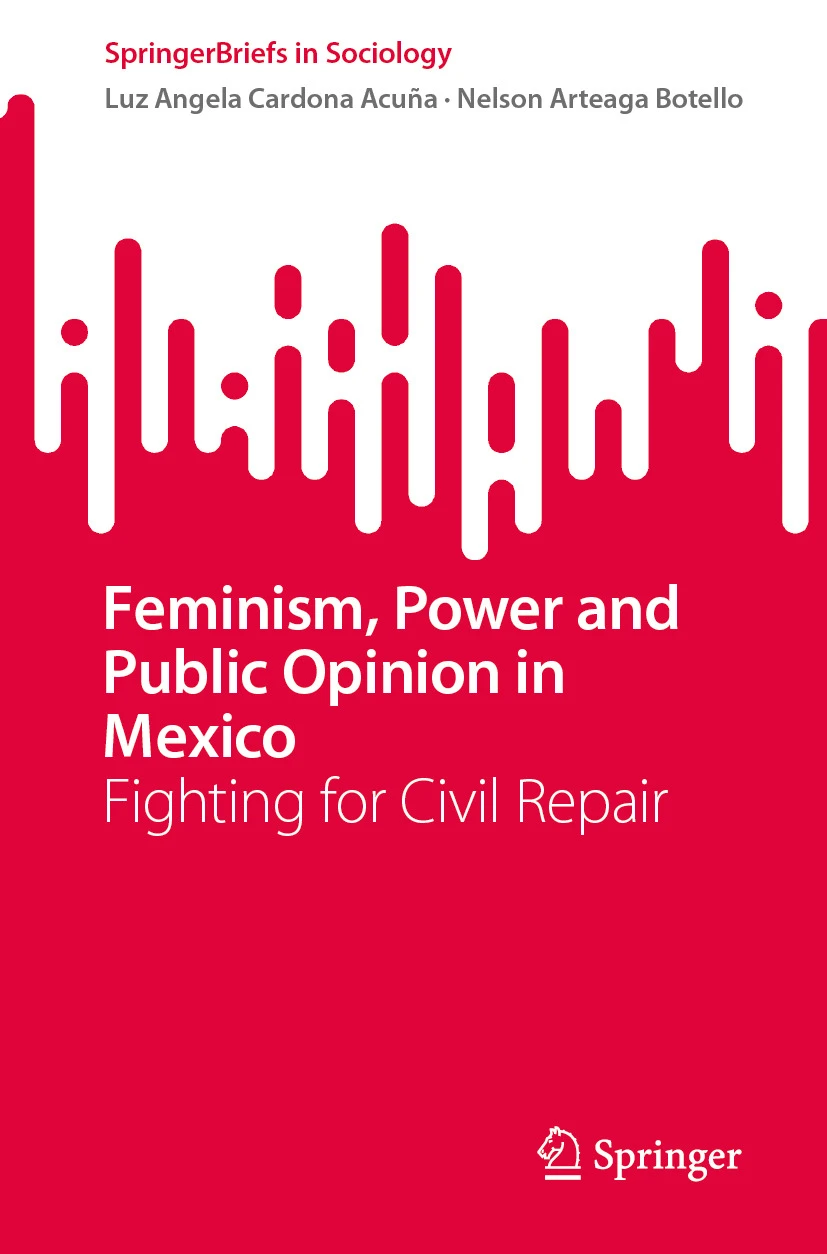




This book shows how four feminist mobilizations in the early 2020s in Mexico expressed widespread rejection of harassment, sexual violence, and femicide. It discusses the cultural environment in Mexico that has allowed violence and femicides to be interpreted as a serious situation, to the point that it questions the authority of presidential power and mobilizes public opinion for and against it…
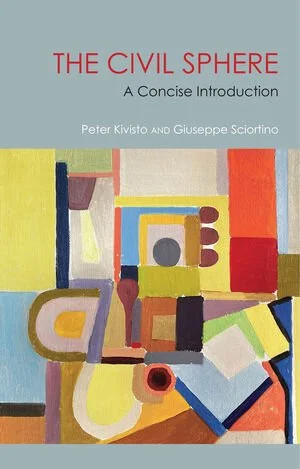
The book reveals the ways in which the various components of CST come together to offer an illuminating framework for making sense of the complexities, ambiguities, and tensions inherent in modern democracies located in highly differentiated and pluralistic societies. It compares CST to civil society theories from the past and present, along with the idea of the societal community and Habermas’s theory of the public sphere…
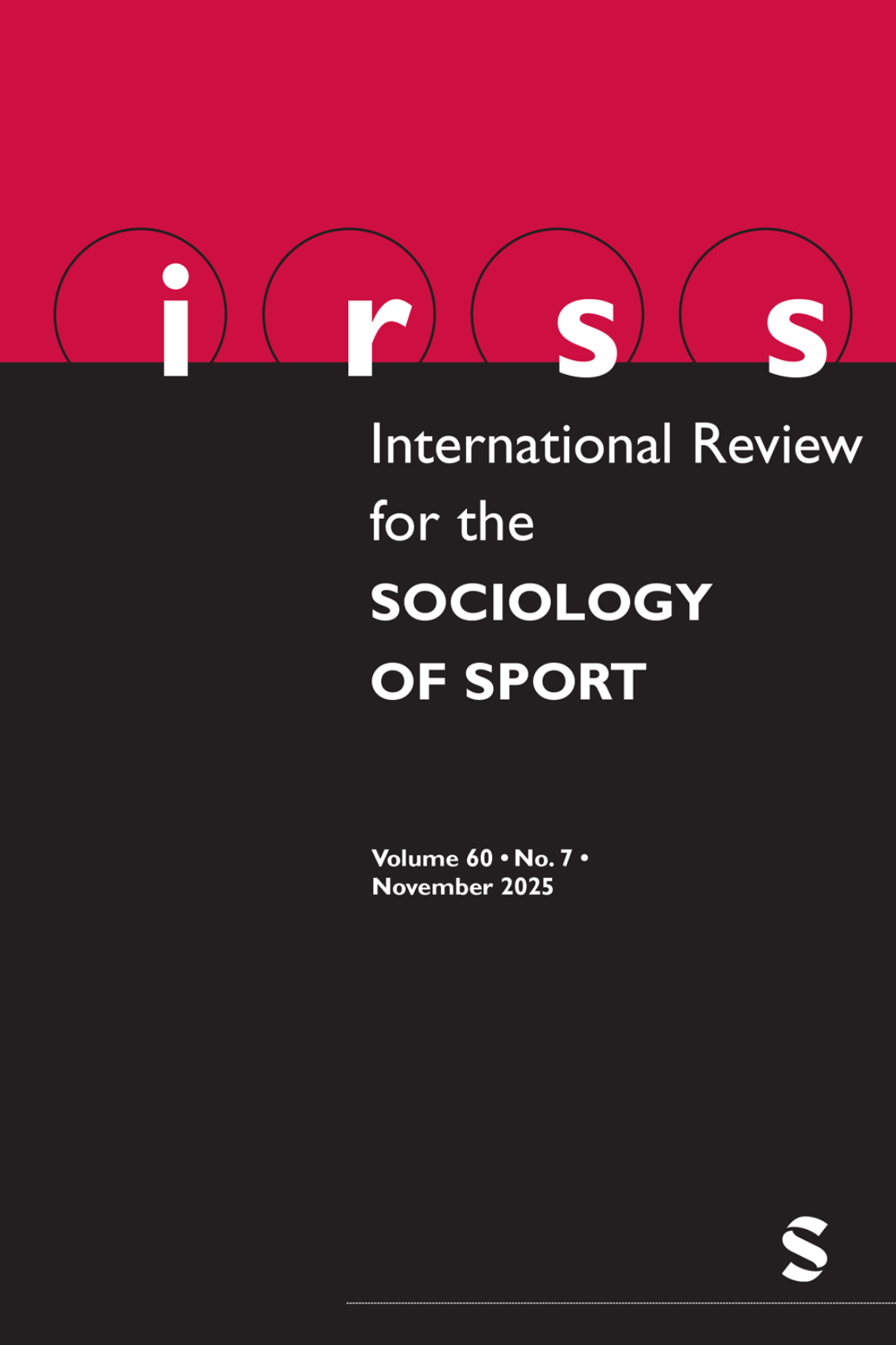
How can state politics reconstruct unhealthy, undemocratic and unsound sports as a common good? This study explores the convergence of state and sport politics. Using cultural sociology, I unearth how the Nordic welfare state reconstructs children's sport and embeds it in its broader purview of civil society. Through document-ethnography of white papers from the Ministry of Health and Care Services, Ministry of Culture, and Ministry of Childhood and Families…
It was the intellectually brilliant, if not tragic, figure of Stefan Zweig who said that “one must be convinced to convince, to have enthusiasm to stimulate the others.” Aside from the fact that he was Austrian, a more pertinent reason for citing Zweig is that his words capture something of how I feel when I recall my experience of the recent CST Working Group conference…
This article discusses Israel Zangwill's play The Melting Pot (1908) and Horace M. Kallen's essay ‘Democracy versus the Melting Pot’ (1915) as two different visions of future Jewish inclusion. Zangwill's play and Kallen's response reflect social changes at the time, and both visions consider Jewish history exemplary for the world-to-come…
The present paper delves into how symbolic boundaries in a school that is undergoing a desegregation process come to shape social boundaries of ‘we-ness’ and ‘otherness’. The theoretical framework of the study starts from an interest in analysing whether symbolic and social boundaries emerge…
The international conference “The Civil Sphere in Central and Eastern Europe” took place on 30 June–1 July 2025 at the European University Viadrina in Frankfurt (Oder), Germany. Co-organized by Nadya Jaworsky (Masaryk University Brno) and Susann Worschech (European University Viadrina), the event gathered scholars from across the world to examine civil, uncivil, and noncivil dynamics in post-socialist societies. The result will be an edited volume entitled Post-Transformation and the Civil Sphere in Central and Eastern Europe, to be published in 2026 by Palgrave MacMillan, with Jeffrey Alexander, Nadya Jaworsky and Susann Worschech as editors…
We’re happy to announce that the full program for the Civil Sphere Theory Working Group Meeting 2025 is now available. Explore the panels, speakers, and sessions that await you in Vienna this October.
This special issue arose out of a conference hosted at Heidelberg University “The Civil Sphere: Global Perspectives on Culture and Politics,” from October 18-19, 2023. The conference united scholars working in the field of cultural sociology from across the globe, with the shared goal of engaging with and further developing Civil Sphere Theory, considering its global dimensions, in particular…
Indian democracy is in trouble. A still widely popular, democratically elected leader stands athwart it, dangerously authoritarian and disrespectful of civil liberties, the independence of the courts and the press, and disputatious vis-à-vis organized counter-powers. Leading intellectuals, Indian and Western, write about the death of Indian democracy and the passage to despotism. Despite these clear and present dangers, this volume suggests that the death of Indian…
When activists, advocates, victims of injustice, and ordinary citizens seek to advance (or block) social justice and cohesion, they draw on morally charged ideals. But the wellsprings of solidarity and conflict are complex in a society as diverse as Canada…
While previous works focus on theological and philosophical approaches to interfaith dialogue, this study explores an interreligious civil sphere through the lens of cultural sociology. This article examines the Saparan-Aprilan (purification ritual) as a hybrid festivity in Central Java, Indonesia. The festivity is based on Christian narratives, local cultural texts, and Indonesian political codes as a social script for civic engagement…